Presented by
Natasha Simon
Visit Site
Texas hospitality feels best when it is generous without turning performative. Readers do not need a magazine feature that implies every gathering requires a designer tablescape, a smoked brisket, and a full day of stress. They need practical cues for making a home feel open, relaxed, and easy to enjoy, whether they are inviting cousins over after church, hosting neighbors for a patio dinner, or calling friends to come watch a game on short notice.
That is where a strong hosting article earns its place. The best hosts are not always the ones doing the most. They are the ones who shape the night clearly. They create a setting where guests know where to stand, where to pour a drink, where to land their plate, and how the mood is supposed to feel from the first five minutes onward. Good hosting removes social friction before anyone names it.
This feature looks at local-style entertaining through the details that matter most: choosing an anchor that makes the gathering feel memorable, setting the flow so guests move naturally, and building a repeatable system that lets the host stay present instead of trapped in prep mode all evening.
Build the room around one relaxed anchor
The easiest gatherings usually center on one thing done well: a taco board, a signature drink, a dessert worth talking about, or a playlist that tells guests what kind of night they are walking into. When there is one relaxed anchor, the event feels intentional even if everything else stays simple. People know what they are gathering around, and that lowers pressure for the host too.
This is especially true in Texas, where entertaining often spills across indoor and outdoor zones. One great anchor helps the whole house cohere. If the food board is the star, let drinks be easy. If the patio is the draw, keep the menu casual and the lighting warm. The goal is not to impress guests with volume. It is to give the evening a center of gravity.
Keep the flow visible
Great hosts remove friction. They create one obvious place for drinks, one easy spot to gather, and enough breathing room that guests never feel like they are interrupting the house to enjoy it. Even small homes can feel graceful when the path from entry to seating to snacks is clear. People relax faster when they do not have to ask where anything goes.
That is why hosting is partly a layout exercise. A sideboard can become a self-serve station. A kitchen island can handle the first wave of arrivals while the patio takes over later. A hallway table can hold stacks of plates, folded napkins, or a candle that signals the evening is cared for. When flow is visible, the gathering feels easier before the first real conversation even begins.
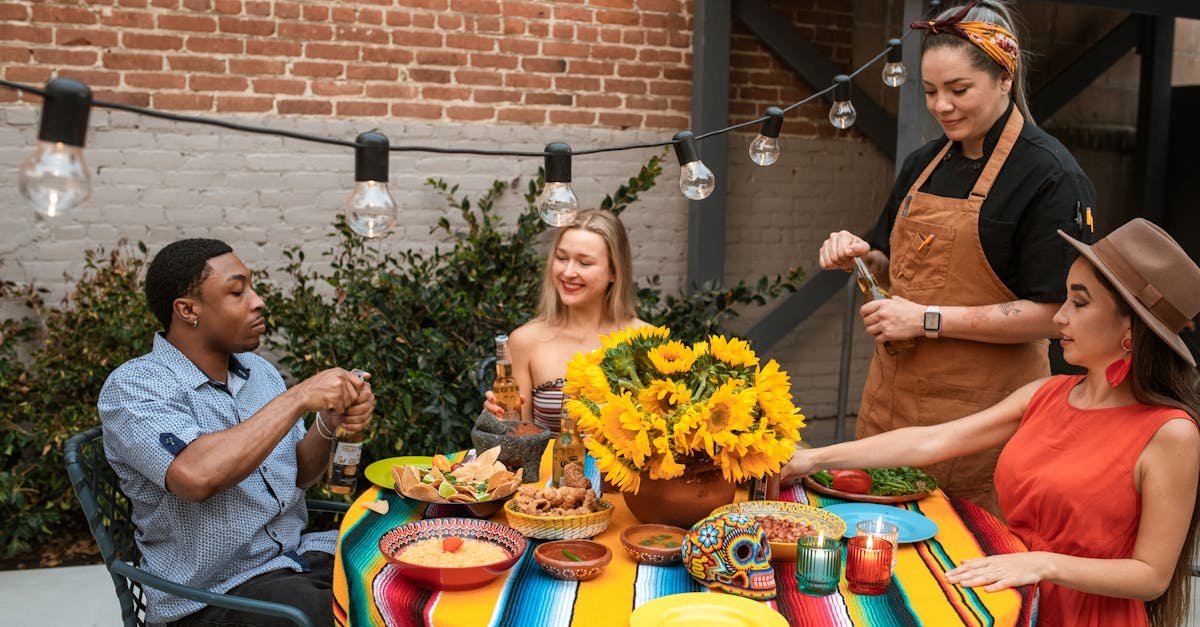
Low-lift hosting upgrades
- Set drinks in a self-serve zone so guests can help themselves.
- Mix warm lighting with one brighter task light near the food.
- Use one tray or board to make even simple snacks feel intentional.
- Keep a stack of cloth napkins or sturdy paper goods within sight.
- Choose music early so the mood is set before the first guest arrives.
Start with a menu that survives conversation
Hosts often make the night harder than it needs to be by choosing food that punishes them for stepping away. The better strategy is to build a menu that can hold for a while and still taste good. This is why room-temperature dishes, boards, warm tortillas wrapped in a towel, marinated vegetables, sheet-pan skewers, and a batch cocktail work so well for local gatherings. They let the host stay part of the evening instead of hovering over timing every ten minutes.
Readers appreciate this because it makes hospitality feel achievable. The goal is not restaurant service. It is ease with personality. A jalapeno-lime drink in a pitcher, a tray of roasted vegetables with a creamy dip, or a dessert that can be sliced after conversation has already started all send the same signal: you are welcome here, and the evening is meant to feel relaxed.
Stage the first ten minutes of arrival
The opening moments of a gathering set the emotional temperature for everything that follows. If people arrive to a dark room, cluttered counters, and a host who is still visibly scrambling, the energy stays unsettled longer. If they arrive to a lit porch, music already on, a place to set a bag, and one clear first offering like water, wine, or a simple snack, the house feels ready for them. That readiness is what guests remember.
One useful hosting habit is to walk the arrival path before anyone rings the bell. Stand outside, come in through the front door, and notice what the house says. Is there a visual landing point? Is the best gathering zone obvious? Is there anything small that would make people feel more immediately cared for, like colder water, better lighting, or a cleaner console? That five-minute rehearsal does more for hospitality than most last-minute decoration.
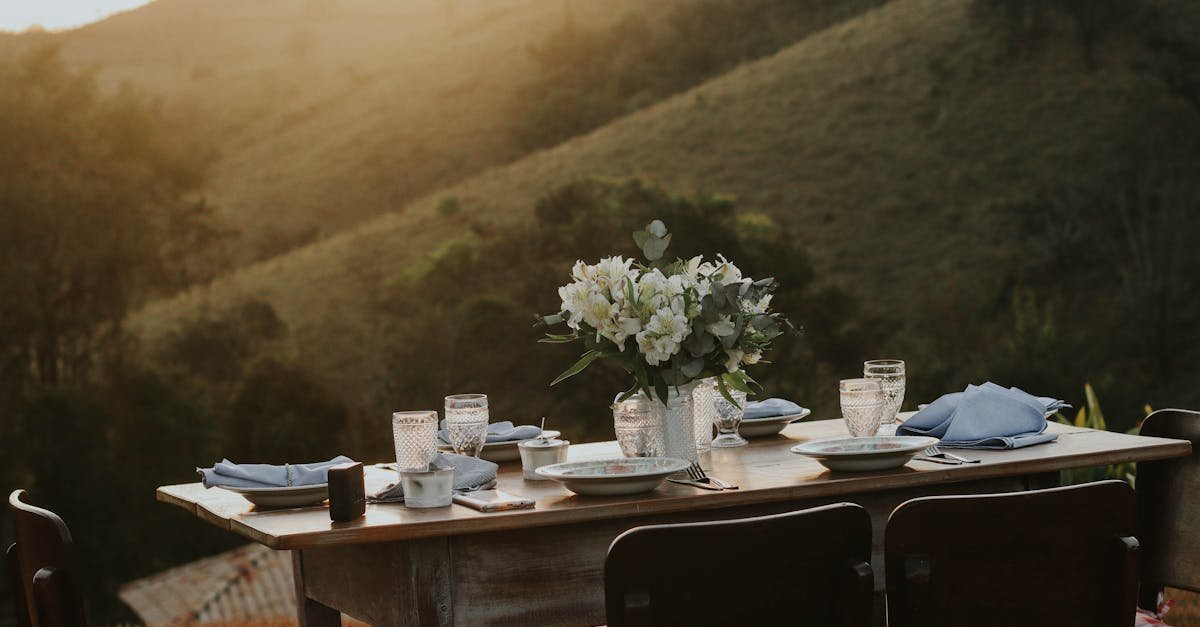
The two-hour hosting reset
- Clear the main surfaces guests will actually touch or see first.
- Prep one cold item, one warm item, and one easy refillable drink.
- Light the house and patio before the sun drops so the transition feels seamless.
- Put away anything fragile or fussy so you can stay in the moment once people arrive.
Give guests one memorable detail
The gatherings people talk about later are rarely the most elaborate. They are the ones with one detail that felt particularly thoughtful: the cooler already stocked on the patio, the playlist that perfectly matched the weather, the dessert brought out just as the sky turned, or the tray of bug spray and blankets that made everyone feel considered. A memorable detail is really just a visible act of hospitality. It proves the host thought ahead for the comfort of other people.
This is also where a home's character gets to do some quiet work. A wide kitchen island, a porch swing, a shaded backyard, or a dining area that opens toward conversation rather than away from it can turn ordinary hosting into something that feels especially natural. Good entertaining reveals whether a home truly supports connection or merely photographs well.
Make hosting a repeatable part of life
The real payoff of low-friction entertaining is not one perfect night. It is frequency. When the house has a few dependable hosting systems, readers become more willing to invite people over on an ordinary Thursday or for a casual Sunday meal. That has enormous lifestyle value. Friendship deepens when hospitality is less ceremonial and more woven into real life.
This kind of feature helps the magazine feel socially generous, and it quietly reinforces a real-estate truth too: homes that support connection are easier for buyers to imagine themselves loving. A house that hosts well tends to feel bigger emotionally than the floor plan alone might suggest.
There is also a community dimension to hosting that matters in a magazine like this. Casual dinners, porch drinks, and low-pressure invitations are often how people build trust with neighbors, deepen friendships, and feel rooted in a place. Hospitality is not only about entertaining well. It is about creating the conditions where life in a neighborhood begins to feel more connected and more generous.
That makes hosting a surprisingly practical lifestyle skill. Readers who learn to simplify the setup, repeat a few dependable rituals, and let the home support the evening rather than compete with it are far more likely to use their spaces meaningfully. The result is a house that feels more alive, not just more decorated.
In other words, good hosting is not a performance of abundance. It is a practice of clarity. When the house is easy to enter, the food is easy to enjoy, and the host is free enough to truly welcome people, the evening becomes more memorable for everyone involved. That is a standard readers can actually use, which is exactly what makes it worth publishing.
It also gives prospective buyers a sharper lens for evaluating homes. They can ask which spaces invite people to gather naturally, which layouts reduce friction, and which details would make everyday hospitality feel effortless instead of stressful. That is a far better measure of value than staging alone.
When readers understand that, hosting stops feeling like a special-occasion burden and starts looking more like a realistic way to enjoy the home they already have.
That shift is powerful because it turns hospitality from a rare event into a repeatable part of a good local life.
And that is exactly the kind of lifestyle upgrade people remember.
It is small in theory, but in practice it can transform how connected a home feels.
Once the barrier drops, people often discover they did not need more spectacle; they simply needed a more repeatable invitation.